No whistling on sailing vessels (could bring a storm)
Do not turn hatch covers upside down (ship might turn over)Japanese – do not pour miso (soup) over rice) could cause ship to be ungulfed by water.
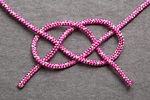
Other rituals are not so clear in the origin. Hard hat divers used to tie a carrick bend through the loops in the Mark V diving helmet.Divers would not wear the helmet if this had not been done.
You can see the rings on the Mark V helmt pictured here:

This is a carrick bend:
Contagious Magic: Things once in contact continue to have relationship
These usually involve sorcery and the idea that is hair or nails or some part of the person can be obtained magic can be used with this that will impact the person whose "bady part" has been gotten a hold of.
Practices may be group or individually based: Individual practices: crossing one’s self, Japanese wrestlers throwing salt; putting piles of salt outside a store where an Eta (member of the “untouchable” caste) had been Individual rituals often done by in situations of crisis or risk (Do magic when there is nothing else to do!). Pitchers in baseball have more rituals than outfielders.
Rituals are performances in the realm of the sacred they may be group events or done individually.
Examples are Orthodox Christians throwing the cross into the ocean for divers to retrieve on Jan 6th (the epiphany – the day usually seen as the day when Christ is baptized.
Individual baptisms require several participants – a religious official, a child, a parent or two and a god parent. This is a smaller group ritual and revolves around an individual.
Misogi Japanese purification with water
Crossing the line ceremonies: A rite of passage or transition marking a change of status. These transitions may be marked on the body in things like tattoos.
Among individual rituals are tattooing as well (One song says "A sailor ain’t a sail til a sailor’s been tattooed"). Tattooing falls under a number of categories – religious, artistic and practical. At ione level it isa symbolic marked of a rite of passage. The subject of body modification has received a lot of attention. Several kinds of body modification are defined:
Note that the same modification can be symbolized in different ways:
Accidental – a scar resulting from an accident (a fall, a car crash – even a dueling match)
By product – a scar resulting from an operation
A deliberate act: ritual scarification to mark status or achievement (runner has a road running on his leg; military person gets a tattoo when he completes basic training, goes into a specialized unit). Some sailors crossing the line get tattooes. There is a tradition to tattoo a compass on the shoulder - These are often personally done rather than required by the organization. In a sense one’s life history is written on the body. People have written about corporal punishment as the state writing the punishment on the body.
Tattoo as a word comes from Polynesia, a place known for its elaborate tattoos.
This photo is an old one showing an elderly man with complete face tattooing.

This is more currect - there has been an increase in the return to the old custom:

Some men get full body tattoos which are more elaborate:

There is some sexual differntiation in that women tend to tatoo only the chin and lip areas:

The Latin word is “Stigma” and its feeling of negativity still comes through in that word in English. Tattooes were learned from the Persians who used them to mark slaves so they could be identified if they ran away. The Greeks and Romans seem to have followed this tradition and also tattooed “barbaians” who had been brought into the Roman armies to identify them if they deserted.
Ancient Roman sailors did some tattooing since it was a kind of identification of the body in the sense that if a sailor drowned at sea, the readily identifiable parts of the body might be destroyed but a body part with a tattoo might be usable to identify the person.
When Western seafarers picked up the art form (believed to have been on Cook's voyages, the idea was borrowed from the Polynesians, but the style of the art was western.

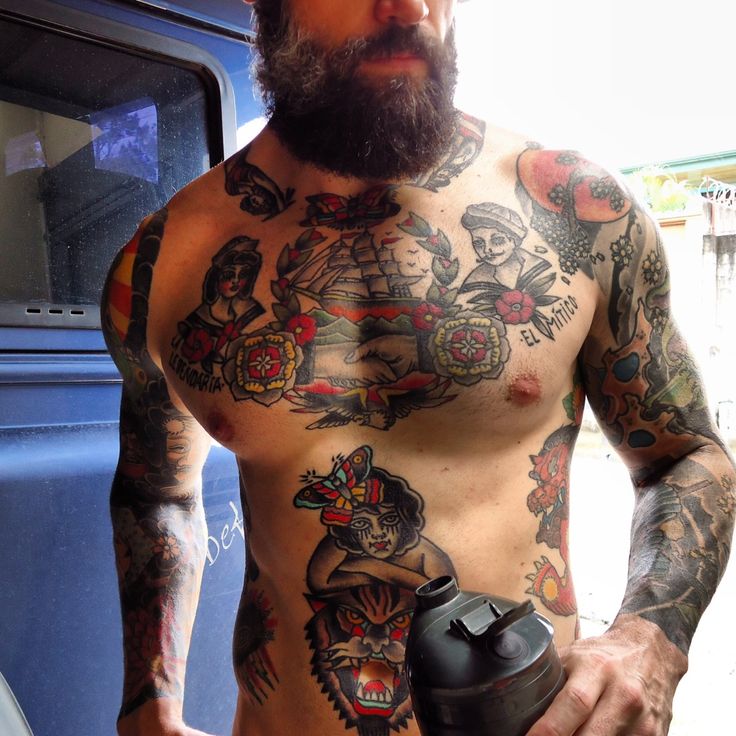
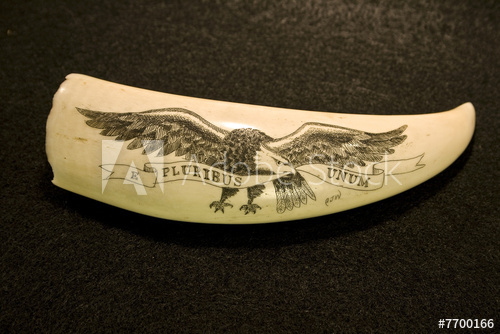
Tattoos can also be considered an art form. We have talked a bit about some “sailor arts” before like scrimshaw – the etching on ivory. For seafarers it is usually on sperm whale teeth and walrus tusks.
In the crossing of the equator rituals, Poseidon/Neptune holds court and “pollywogs” or “tadpoles” (who have not crossed the equator) are hazed by shellbacks (who have crossed the equator). Hazing is a kind of testing during an intitation. You can see it in the misogi as well as here.
These rituals often do a kind of role reversal where the taditional social structure is overturned. This happens in some Lenten festivals as well for example. There is generally a good deal of playing with social categories - cross dressing; a particularly dense or somewat retarded person being made mayor; and a general reversal of the social order.
Sailors who have already crossed the Equator are known as Shellbacks, and those who have not are nicknamed as Tadpoles or Pollywogs. A Golden Shellback is a person who has crossed the Equator at the 180th meridian (the International Date Line). If a person crosses the Equator at the Prime Meridian they gain status as a Royal Diamond Shellback (aka Emerald Shellback in the USA). Similar ‘fraternities’ in the US Navy and have been adopted by many others. Various sources indicate that these include:
The ritual is a ceremony presided over by King Neptune (the ancient ruler of the seas) who wears a gold crown and holds a trident. Sitting beside him is his wife Queen Amphitrite. They are surrounded by a villanous surgeon, a barber, guards and people dressed as bears. The form and make–up of the ceremony is far from standardized, and the cast can include a wide range of characters depending on the experience and imagination of the participants. The cast of characters in the ‘play’ usually includes: People crossing the line get a certificate like this one:

Folklore (Oral literature) Usually folklore is distinguished from literature in that literature is seem to have been authored by a specific person and so there is an "authorative text". On the other hand folklore has no authorative version. Different people may tell the stories differently and are not corrected.
Folklore may involved the sea and sea creatures.
North West Coast Indians.

These cultures are found along the coast from Southeastern Alaska down tho Northern California, close to the shores and are classified as "salmon area cultures". Salmon are interesting in that they live in salt oceanic wter, but spawn in fresh water. Such fish are called anadromous.
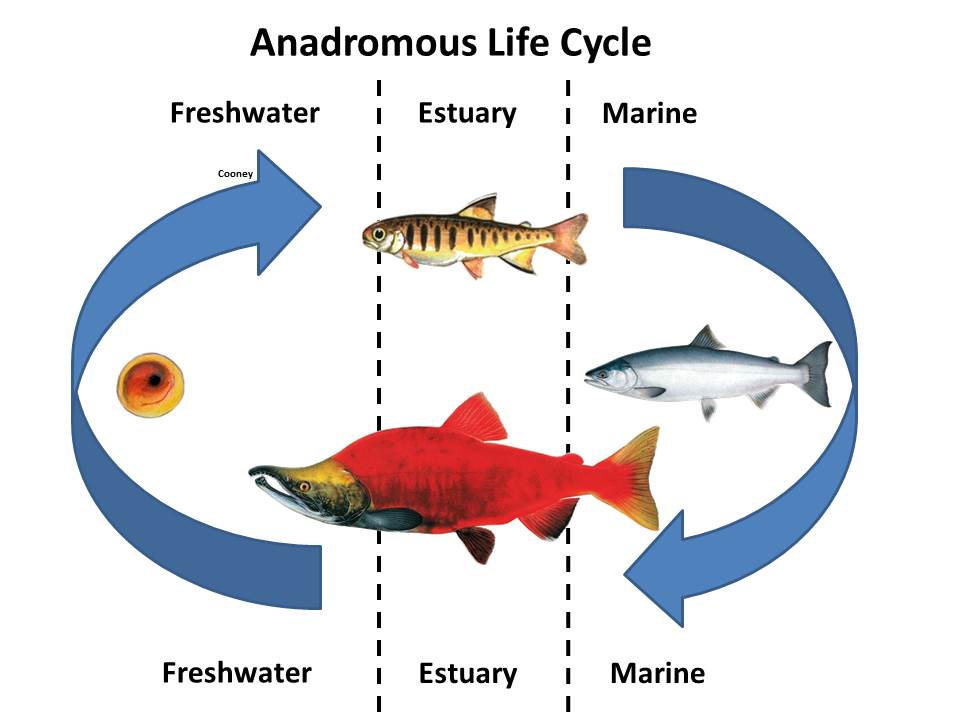
The salmon are an example of this kind of fish

Salmon swim upstream to spawn and in the same rivers where they themselves were born.
Fish which reverse the process and are normally found in fresh water but spawn in the ocean are called catandromous.

and is typified by the American eel:
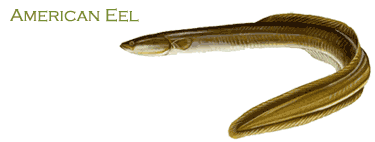
These are easy to remember since animals born at SEA (C) are catadromous.
Animals are a kind of people dressed in different clothing (skins) and live in a different place (maybe world). So when you kill an animal and eat it, you are only removing its “clothes”. Care must be taken to dispose of the bones however. So there are salmon people who come up stream to spawn (Salmon are anadromous live in sea spawn in fresh water as opposed to those animals which are catadromous like the Atlantic eel which lives in fresh water but spawns in salt water). When these salmon are caught they need to have their bones thrown back into the water so they can swim home and get “redressed” and come back again. In the stories there are people who show up with missing body parts who turn out to be salmon people, all of whose bones were not returned to the water. There is a frantic hunt to get the bones and return them because one does not want to aggravate offend or antagonize the animal people because they might not return again.
Some comparative psychologists have suggested that the presence of the bones in the water may be a clue to the salmon as to which stream is the one they were born in so they can find their way back In terms of religion we have discussed the idea of the supernatural and the concepts of the sacred and consecration especially as they relate to symbolism. We mentioned rituals of cleansing in which water metaphorically cleanses people other than physically.
The ocean contains "salt" which is actually salt plus a number of minerals. When sea water evaporates, the salt is left behind. In a sense it seems to appear miraculously, since it is not visible in the water. In Japan, salt is considered something purifying as well.
The national sport in Japan is Sumo (sumoo) a form of wresting which has very ceremonial aspects to it. Sumo wrestlers enter the ring (actually a round area on a flat topped mound and perform as ritual known as "do hyoo iri" or "ring entering ceremony" in which certain actions are performed. Among these are the throwing of salt, which occurs at other times in the matches. This ceremony is also done each year at Ise Jingu (the shrine at Ise where the Sun Goddess is supposed to have come to earth. (The term "jingu" and "jiinja" refer to Japanese Shinto shrines). The wrestlers may also go to the foot of volcanos which are threatening to erupt and perform the ritual there for the purposes of "calming" the volcano.
Japan has an indigenous population known as the Ainu who were there before the people we know as the Japanese arrived. In this sense (and only this sense) they are akin to the American Indian population here.
The Japanese also have a stratified society and until the end of WWII there was an "untouchable" group known as the Eta who lived in their own sections of the cities. They dealt with handling dead animals which in a sense made then "impure". After the war discrimination against the Eta became illegal, but many of them as a result of dislocation during the war, were "passing" as non Eta. There have been movements in which some Eta have asserted their identities as Eta and demanded some sort of compensation for the generations of discrimination.
If an Eta visited a store, one might find a small pile of salt piled up outside the door to purify the place which had been made "unclean" by the arrival of the member of the Eta. So not only ocean water, but salt from the ocean is seem as something which can purify.
The ocean also supplies food to a large portion of the population. Hence fishing (in a most general sense - i.e. getting food from the ocean whatever it may be - animal or vegetable and whether the animal is invertebrate or vertebrate regardless of whether it is a clam, a lobster or sea cucumber as an invertebrate or a fish or mammal as a vertebrate) is very important to people who live on the shores of the ocean. The food can be important to the people as something they themselves eat, or it may be traded or exported for money. The ocean is a major economic resource for many people.
In places like Japan there are problems with the small amount of arable land. There are many mountains and areas unsuitable for farming and many of the areas that might have been usable were sufficiently flat that cities were built on them. As a result the Japanese have used the ocean as the Americans used the Plains. Rice farming is the major food source, but food from the sea is found everywhere. Many Buddhists who are largely vegetarians will eat fish and other animals from the sea.
FOOD TABUS
Some food food tabus cross the line between food and religion, although there are non-religious rejections of certain items as food.
Everywhere in the world, there are edible materials which the people normally do not eat. Some restrictions on eating are religious and some are not. In America, by and large insects are considered inedible, although other cultures, eat them with no problems: grasshoppers, water bugs and so on are all potentially food.
Chinese avoid milk and many milk products. Chinese report that milk is something excreted by the body like sweat which Americans would doubtless find unappealing as well! (Despite this, Japan has a soda with the rather unpleasant name (to Americans) of Poccari Sweat. (To the Japanese the metaphor seems to imply “sports”
Most, if not all, mammals are edible but people in different cultures do not eat them Americans do not eat dogs, cats or horses. Generally, Americans do not eat snakes, although for some people the eel, snake like in general appearance is OK. Shell fish may be avoided. Many Americans are unhappy about eating squid, while other cultures think it fine.
Some foods are just culturally not identified as “food” whereas others are tabooed by religion. Some are suggested not to be eaten (no meat on Fridays) or during Lent (Carnival is from Carne Vale – Farewell to Meat) The prohibition against eating pork by Jews and Muslims is another example. . The book of Leviticus deals with the notion of cleanliness and uncleanliness. It details the kinds of animal sacrifices to be made to remove an unclean state. It deals with uncleanliness caused by illness
Probably the most famous injunctions for us are those from the book of Leviticus in the Bible . This book deals largely with ritual behavior and the concepts of cleanliness and lack thereof. In chapter 11 contains the prohibitions against the eating of pork. The prohibition against eating pork applies not only to Jews but Muslims as well. In addition, Leviticus prohibits the eating a large number of food items some of which come from the ocean (verse 9) Leviticus prohibits the eating of things from the waters which do not conform to a rule that says:
Here is Chapter 11 in its entirety in 2 translations of Chapter 11
CHAPTER 11
1 The LORD spoke to Moses and Aaron. He said to them,
2 “Speak to the Israelites. Tell them, ‘Many animals live on land. Here are the only ones you can eat.
3 You can eat any animal that has hooves that are separated completely in two. But it must also chew the cud.
4 Some animals only chew the cud. Some only have hooves that are separated in two. You must not eat those animals. Camels chew the cud. But their hooves are not separated in two. So they are “unclean” for you.
5 Rock badgers chew the cud. But their hooves are not separated in two. So they are “unclean” for you.
6 Rabbits chew the cud. But their hooves are not separated in two. So they are “unclean” for you.
7 Pigs have hooves that are separated completely in two. But they do not chew the cud. So they are “unclean” for you. 8 You must not eat the meat of those animals. You must not even touch their dead bodies. They are “unclean” for you.
9 Many creatures live in the water of the oceans and streams. You can eat all those that have fins and scales.
10 Treat as “unclean” all the creatures in the oceans or streams that do not have fins and scales. That includes all those that move together in groups and all those that do not.
11 Treat them as “unclean.” Do not eat their meat. Treat their dead bodies as “unclean.”
12 Regard as “unclean” everything that lives in the water that does not have fins and scales.
13 Here are the birds you must treat as “unclean.” Do not eat them because they are “unclean.” The birds include eagles, vultures and black vultures.
14 They include red kites and all kinds of black kites.
15 They include all kinds of ravens.
16 They include horned owls, screech owls, gulls and all kinds of hawks.
17 They include little owls, cormorants and great owls.
18 They include white owls, desert owls and ospreys.
19 They also include storks, hoopoes, bats and all kinds of herons.
20 Treat as “unclean” every flying insect that walks on all fours.
21 But you can eat some flying insects that walk on all fours. Their legs have joints so they can hop on the ground.
22 Here are the insects you can eat. You can eat all kinds of locusts, katydids, crickets and grasshoppers.
23 Treat as “unclean” every other creature with wings and four legs.
24 You will make yourselves “unclean” if you eat these things. If you touch their dead bodies, you will be “unclean” until evening.
25 If a person picks up one of their dead bodies, that person must wash their clothes. They will be “unclean” until evening.
26 Suppose an animal has hooves that are not separated completely in two. Or suppose an animal does not chew the cud. Then these animals are “unclean” for you. If you touch the dead body of any of them, you will be “unclean.”
27 Many animals walk on all fours. But those that walk on their paws are “unclean” for you. Anyone who touches their dead bodies will be “unclean” until evening.
28 If a person picks up their dead bodies, that person must wash their clothes. They will be “unclean” until evening. These animals are “unclean” for you.
29 Many animals move along the ground. Here are the ones that are “unclean” for you. They include weasels, rats and all kinds of large lizards.
30 They also include geckos, monitor lizards, wall lizards, skinks and chameleons.
31 These are the animals that move around on the ground that are “unclean” for you. If you touch their dead bodies, you will be “unclean” until evening.
32 Suppose one of them dies and falls on something. Then that thing will be “unclean.” It does not matter what it is used for. It does not matter whether it is made out of wood, cloth, hide or rough cloth. Put it in water. It will be “unclean” until evening. After that, it will be “clean.”
33 Suppose one of these animals falls into a clay pot. Then everything in the pot will be “unclean.” You must break the pot.
34 Any food that could be eaten but has water on it that came from that pot is “unclean.” And any liquid that could be drunk from it is “unclean.”
35 Anything that the dead body of one of these animals falls on becomes “unclean.” If it is an oven or cooking pot, break it. It is “unclean.” And you must consider it “unclean.”
36 But a spring or a well for collecting water remains “clean.” That is true even if the dead body of one of these animals falls into it. But anyone who touches the dead body is not “clean.”
37 If the dead body falls on any seeds that have not been planted yet, the seeds remain “clean.”
38 But suppose water has already been put on the seeds. And suppose the dead body falls on them. Then they are “unclean” for you.
39 Suppose an animal you are allowed to eat dies. If anyone touches its dead body, they will be “unclean” until evening.
40 If they eat part of the dead body, they must wash their clothes. They will be “unclean” until evening. If they pick up the dead body, they must wash their clothes. They will be “unclean” until evening.
41 Treat as “unclean” every creature that moves along the ground. Do not eat it.
42 Do not eat any of these creatures. It does not matter whether they move on their bellies. It does not matter whether they walk on all fours or on many feet. It is “unclean.”
43 Do not make yourselves “unclean” by eating any of these animals. Do not make yourselves “unclean” because of them. Do not let them make you “unclean.”
44 I am the LORD your God. Set yourselves apart. Be holy, because I am holy. Do not make yourselves “unclean” by eating any creatures that move around on the ground.
45 I am the LORD. I brought you up out of Egypt to be your God. So be holy, because I am holy.
46 These are the rules about animals and birds. These are the rules about every living thing that moves around in the water. And these are the rules about every creature that moves along the ground.
47 You must be able to tell the difference between what is “clean” and what is not. You must also be able to tell the difference between living creatures that can be eaten and those that can’t.’?”
1 And the Lord spake unto Moses and to Aaron, saying unto them,
2 Speak unto the children of Israel, saying, These are the beasts which ye shall eat among all the beasts that are on the earth.
3 Whatsoever parteth the hoof, and is clovenfooted, and cheweth the cud, among the beasts, that shall ye eat.
4 Nevertheless these shall ye not eat of them that chew the cud, or of them that divide the hoof: as the camel, because he cheweth the cud, but divideth not the hoof; he is unclean unto you.
5 And the coney, because he cheweth the cud, but divideth not the hoof; he is unclean unto you.
6 And the hare, because he cheweth the cud, but divideth not the hoof; he is unclean unto you.
7 And the swine, though he divide the hoof, and be clovenfooted, yet he cheweth not the cud; he is unclean to you.
8 Of their flesh shall ye not eat, and their carcase shall ye not touch; they are unclean to you.
9 These shall ye eat of all that are in the waters: whatsoever hath fins and scales in the waters, in the seas, and in the rivers, them shall ye eat.
10 And all that have not fins and scales in the seas, and in the rivers, of all that move in the waters, and of any living thing which is in the waters, they shall be an abomination unto you:
11 They shall be even an abomination unto you; ye shall not eat of their flesh, but ye shall have their carcases in abomination.
12 Whatsoever hath no fins nor scales in the waters, that shall be an abomination unto you.
13 And these are they which ye shall have in abomination among the fowls; they shall not be eaten, they are an abomination: the eagle, and the ossifrage, and the ospray,
14 And the vulture, and the kite after his kind;
15 Every raven after his kind;
16 And the owl, and the night hawk, and the cuckow, and the hawk after his kind,
17 And the little owl, and the cormorant, and the great owl,
18 And the swan, and the pelican, and the gier eagle,
19 And the stork, the heron after her kind, and the lapwing, and the bat.
20 All fowls that creep, going upon all four, shall be an abomination unto you.
21 Yet these may ye eat of every flying creeping thing that goeth upon all four, which have legs above their feet, to leap withal upon the earth;
22 Even these of them ye may eat; the locust after his kind, and the bald locust after his kind, and the beetle after his kind, and the grasshopper after his kind.
23 But all other flying creeping things, which have four feet, shall be an abomination unto you.
24 And for these ye shall be unclean: whosoever toucheth the carcase of them shall be unclean until the even.
25 And whosoever beareth ought of the carcase of them shall wash his clothes, and be unclean until the even.
26 The carcases of every beast which divideth the hoof, and is not clovenfooted, nor cheweth the cud, are unclean unto you: every one that toucheth them shall be unclean.
27 And whatsoever goeth upon his paws, among all manner of beasts that go on all four, those are unclean unto you: whoso toucheth their carcase shall be unclean until the even.
28 And he that beareth the carcase of them shall wash his clothes, and be unclean until the even: they are unclean unto you.
29 These also shall be unclean unto you among the creeping things that creep upon the earth; the weasel, and the mouse, and the tortoise after his kind,
30 And the ferret, and the chameleon, and the lizard, and the snail, and the mole.
31 These are unclean to you among all that creep: whosoever doth touch them, when they be dead, shall be unclean until the even.
32 And upon whatsoever any of them, when they are dead, doth fall, it shall be unclean; whether it be any vessel of wood, or raiment, or skin, or sack, whatsoever vessel it be, wherein any work is done, it must be put into water, and it shall be unclean until the even; so it shall be cleansed.
33 And every earthen vessel, whereinto any of them falleth, whatsoever is in it shall be unclean; and ye shall break it.
34 Of all meat which may be eaten, that on which such water cometh shall be unclean: and all drink that may be drunk in every such vessel shall be unclean.
35 And every thing whereupon any part of their carcase falleth shall be unclean; whether it be oven, or ranges for pots, they shall be broken down: for they are unclean, and shall be unclean unto you.
36 Nevertheless a fountain or pit, wherein there is plenty of water, shall be clean: but that which toucheth their carcase shall be unclean.
37 And if any part of their carcase fall upon any sowing seed which is to be sown, it shall be clean.
38 But if any water be put upon the seed, and any part of their carcase fall thereon, it shall be unclean unto you.
39 And if any beast, of which ye may eat, die; he that toucheth the carcase thereof shall be unclean until the even.
40 And he that eateth of the carcase of it shall wash his clothes, and be unclean until the even: he also that beareth the carcase of it shall wash his clothes, and be unclean until the even.
41 And every creeping thing that creepeth upon the earth shall be an abomination; it shall not be eaten.
42 Whatsoever goeth upon the belly, and whatsoever goeth upon all four, or whatsoever hath more feet among all creeping things that creep upon the earth, them ye shall not eat; for they are an abomination.
43 Ye shall not make yourselves abominable with any creeping thing that creepeth, neither shall ye make yourselves unclean with them, that ye should be defiled thereby.
44 For I am the Lord your God: ye shall therefore sanctify yourselves, and ye shall be holy; for I am holy: neither shall ye defile yourselves with any manner of creeping thing that creepeth upon the earth.
45 For I am the Lord that bringeth you up out of the land of Egypt, to be your God: ye shall therefore be holy, for I am holy.
46 This is the law of the beasts, and of the fowl, and of every living creature that moveth in the waters, and of every creature that creepeth upon the earth:
47 To make a difference between the unclean and the clean, and between the beast that may be eaten and the beast that may not be eaten.
People for a long time have recognized that there must be come reasons for these tabus. The famous Jewish scholar and physician Maimonides thought that the pigs eating habits made it unclean. Others felt it was the problem of the round work (nematode) parasite which causes trichinosis.
Anthropologist Marvin Harris claims the problem has to do with ecology and economics. He feels that pigs supply only meat whereas sheep supply wool as well as meet. Pigs are also in greater competition with humans since they are omnivores and so the keeping of pigs is detrimental.
Others have pointed out pigs are not unclean unless they are starved, there are far worse parasites to be found than trichinosis in animals which are not tabued. Some people in the Middle East DO raise and eat pigs. So the battle continues on. Mary Douglas in her book on Natural Symbols makes further argument, one of which is that there are people in the middle east that do deal with pigs and that this is a symbolic way of being different None seem totally adequate – especially when some of the other prohibitions are added
Some might argue that the shorter term prohibitions, like restriction of specific days of the week or seasons when certain foods should not be eaten might be good for preserving the animals population.
Similarly, there are many things in the ocean which are edible, but people do not want to eat.
Other problems with food deal with matters outside (to some degree) of culture. In the Viking case, the weather change is outside of Viking control, but the religious problems complicated the issue.
Mini Ice Age and the Vikings. 1100 – 1180 temperatures in Greenland dropped about 7 degrees F or 4 degrees C. This led to longer periods of sea ice making travel and trade difficult. Shorter growing seasons impacted the food supply and fish moved south into warmer waters.
Eskimo did OK fishing through the ice. Vikings couldn’t learn because they had become Christians and Eskimos had rituals to animals they were about to kill or killed which seem to have been anathema to the Christian Vikings who went to church, prayed and died, while the pagan Eskimos did OK.
Movement of fish in Greenland is not the only problem of this sort based on weather change. The Greenland one was rather long lasting and came once. Others are more complex.
So prohibitions might involve a day (try not to eat meat on Friday) to a couple of weeks (Lent) or a few months. In America there is a nice saying that indicates a cultural (but not religious) prohibition against eating oysters in months without the letter "R"
DON’T EAT OYSTERS IN MONTHS WITHOUT THE LETTER “R”
Other forms are dangerous only at certain times. The phrase "Do not eat oysters in months without "r's" may sound silly but has some validity. R-less months are in the summer when algal blooks are likely. Many of these contain a toxin and oysters filter feed on the algae, thus becoming somewhat toxified themselves. Through "biomagnification" (in which a toxin, for exampl, increases in the body as each higher animal up the food chain easts the one below) can cause serious illness in humans eating oysters with high levels of toxicity.
RELIGION is also involved in tabuing food. No culture has been found where all edible resources are utalized. Some aversion seems to just be cultural in the sense that the object is not seen as food. In America insects are not considered food, but in other places in the workd they are. There are no supernatural proscriptions against eating insects, just an aversion that insects are not food.
Religious prohibitions can be found in the old testiment in the book of Leviticus. Although the major restriction normally mentioned is "pork".
The famed Jewish scholar Maimonides (Rabbi Moses ben Maimon, born 1135 or 1138, died 1204) was one of the first to lok for a reason for teh prohinition against eating pork in the real world. His argument was that pork contains parasites which can be passed on to humans. His argument, while interesting had problems in that there are other animals not tabooed in the area who have parasites that are much worse.
More recently, noted anthropology Marvin Harris proposed that pigs eat similar food to people and hence are in competition for the same food stuffs. In addition, aside from pork they produce no products. Sheep produce wook, goats produce milk and so on. So the prohibition against easting prok makes it likely that people will not raise pigs.
Since then it appears that there are some people in the area that raise pigs and seem not concerned about the competition. None the less, the process of raining them may be edgy.
Finally Mary Douglas, another anthropologist approached the problem symbolically and points out that people classify animals based on a number of things. Generally, for example, things that live in the water are called "fish". Her argument is that "fish" become the "proper kind of animal" and things which lack the criteria of "fish" - gills, fins etc. are seen as "improper' hence unclean and should not be eaten. There is little doubt that the debate is not yet over.
Interestingly enough, many animals are rather "picky" eaters and have rather rectricted diets although this is obviously not seen as cultual.
Other cultures, like some in places like India, reject the killing of cattle and there is also a lively debate about why this should be. These arguments ar often based around the idea that culture is "adaptive" and there seem to be many places where it seems maladaptive (until someone finds a way to show it is really adaptive). So the arguments continue.
The classification of living things is something we have discussed before. One system (which are are using here) is a taxonomic one which catagorizes living things into groups with each higher level being more inclusive. So when we talk about food from the sea, we may not be talking exclusively of fish.
In the most current classification, animals are considered to have (5) characteristics:
Animal constitutes a "Kingdom". (Other Kingdoms are those prokaryotes known as archaea and bacteria, and the organisms known as Eukaryotes which include protists (or proctists) plants, fungi, and animals). The animal kingdom is divided into many "phyla" (singular is "phylum") which range from sponges, cnideria (jelly fish) Ctenophores (comb jellies), Arthropods (joint legged animals like insects, crabs, lobsters etc.); Molluscs which include things like clams, oysters, mussels, squid, octopuses etc.) Echinoderms (star fish, sea cucumbers, sea urchins etc) and Chordates - which have a notochord or strengthening rod down their backs. Most chordates are also vertebrates (animals with backbones) and fall into the following major classes: fish, amphibians, reptiles, birds and mammals). In terms of the ocean we tend to think of it as populated by fish. But aside from the "invertebrate" phyla (those animals without backbones) there are mammals in the ocean (cetaceans=whales,dolphins) seals, sea lions, and manatees that spend all or a great deal of their time in the water. There are repriles like crocodiles, and birds that spend a great deal of their time getting food from the ocean. So many many groups are included here as aniamls associated with or connected with the ocean. Some forms are very dangerous to eat and require special preparation like the Japanese "fugu" fish - a kind of blow fish which is poinsonous until certain organis are removed. You have to be licensed to be a fugu chef in Japan. Japanese sometimes leave a small bit of poison in the fish so as to produce a tingling sensation in the extremeties (fingers and toes). If too much is left in the person can die.Algal blooms themselves are dangerous in that they often cover the surface of the water (nicely initially producing oxygen from photosynthesis), but clocking the sulight from reacing the plants on the ocean floor. This causes death to those organisms, which means they no longer photosynthesize and produce oxygen. The algal blooms last but a short time (although long enough to cause the plants beneath the bloom to die) and then they themselves die. The decomposition of the plants and algae uses up whatever oxygen may be left in the water. These are zones in which nothing can live because there is no oxygen in the water. These are known as "dead zones"